
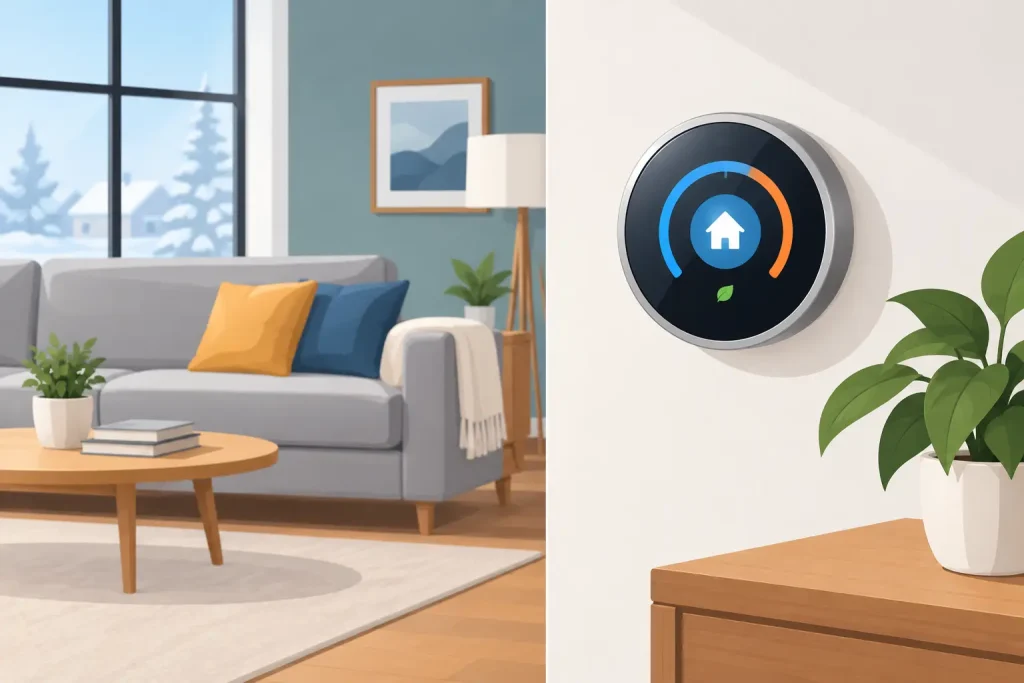
A heating system that comes on while everyone is out, then leaves the house chilly when people return, is wasting comfort as well as fuel. Smart thermostats give households more control over when their heating operates and, in some cases, how hard the boiler works to reach the chosen temperature. They can be a worthwhile upgrade, but only when they suit the boiler, controls and routines already in place.
For homeowners, tenants and landlords, the key question is not simply whether a smart thermostat is fashionable. It is whether it will make the property easier to heat, more comfortable to live in and simpler to manage without creating avoidable control problems.
What smart thermostats actually do
A traditional programmable thermostat follows a timetable set at the controller. A smart thermostat also allows a schedule, but usually connects to an app so the heating can be adjusted from a mobile phone or tablet. Most systems use a receiver fitted near the boiler and a thermostat positioned in the home, communicating by wireless signal.
This means you can turn the heating down after leaving for work, set it to warm the property before returning, or make a temporary adjustment without standing in front of the programmer. For a landlord managing a vacant property between tenancies, remote control can also help maintain a sensible background temperature while avoiding unnecessary heating.
Many models offer features such as geolocation, which can react when household members leave or approach the property, and learning functions that adapt to common routines. Some monitor how quickly a home warms up, allowing the system to start at an appropriate time rather than simply switching on at a fixed hour.
The most useful function, however, is often the simplest one: clear, convenient control. If the existing programmer is difficult to use, people tend to leave heating schedules unchanged for longer than necessary. A straightforward app and a well-set programme can make day-to-day decisions easier.
Smart thermostats and boiler compatibility
Compatibility should be checked before choosing a device. Many smart controls work with common domestic boiler types, including combi, system and regular boilers, but the way they communicate with the boiler can affect the result.
At the basic level, a thermostat tells the boiler to switch on or off when the room temperature is below or above the target. This is often called on-off control. It can still provide useful scheduling and remote access, particularly where an older thermostat has limited settings.
Some boilers can work with more advanced, modulating controls. Rather than repeatedly asking the boiler for full output, a compatible control can request a lower flow temperature when only gentle heating is needed. This may improve comfort and efficiency, but it depends on the boiler manufacturer, the model of boiler and the control protocol it supports. A thermostat with advanced features will not automatically provide advanced boiler modulation.
It is also worth considering how the property is heated. A home with one heating zone is usually more straightforward than a larger property with separate upstairs and downstairs zones, underfloor heating, or a hot water cylinder. The controls must be selected and set up to reflect the system, not just the app features on the box.
Before installation, an engineer should identify the boiler model, inspect the existing controls and confirm what is practical. This avoids situations where a new controller is fitted but cannot operate the heating and hot water as the household expects.
Where the thermostat is placed matters
The thermostat needs to measure a temperature that represents the living space. A position beside a radiator, in direct sunlight, near a cooker, in a draught or behind furniture can cause misleading readings. The heating may stop too early, run for too long or respond unpredictably.
A wireless thermostat gives more flexibility than a fixed wired model, but it should not be moved around constantly. Choose a stable location in a frequently used room, away from obvious sources of heat and cold. If the property has a particular cold room, addressing draughts, radiator performance or balancing may be more effective than moving the thermostat to chase a reading.
Will a smart thermostat reduce heating bills?
It can help reduce wasted heating, but no thermostat can guarantee a particular saving. Results depend on how the property is insulated, the temperatures the household prefers, how often rooms are occupied and whether the heating system is working correctly.
The clearest opportunity comes from avoiding heat when it is not needed. A carefully set schedule is generally better than heating an empty home to the same temperature all day. Temporary boosts can be useful too, but frequent manual overrides may cancel out the benefits of a sensible programme.
There is also a comfort trade-off. Turning heating off for long periods may suit a well-insulated flat, while a larger or older house may take longer to warm through. In some homes, a lower background temperature with timed increases works better than allowing rooms to become very cold and then demanding rapid heat.
Smart radiator valves can provide room-by-room control where they are compatible with the heating layout. They can be helpful in spare bedrooms, home offices or rooms used at different times. However, they should be planned as part of the whole system. Closing too many radiator valves while the boiler is running can cause circulation issues unless the system has suitable bypass arrangements and controls.
A smart control will not fix a heating fault
A thermostat can only control the heating system it is connected to. If the boiler is losing pressure, making unusual noises, locking out, failing to produce hot water or leaving radiators cold, changing the thermostat is unlikely to solve the underlying issue.
Likewise, uneven room temperatures can be caused by trapped air, poor radiator balancing, a faulty valve, sludge in the system or an incorrectly set boiler. An app may make the fault more visible, but it does not remove the need for diagnosis.
If heating stops working after a control change, do not keep resetting the boiler or altering settings at random. Check that the thermostat has power, the receiver is connected and the programmed temperature is higher than the current room temperature. If the issue continues, arrange for a competent engineer to inspect the boiler and controls safely.
Getting the installation and settings right
The installation should be treated as a heating controls job, not just a quick device swap. The existing programmer may control both central heating and hot water, and the new unit must be configured correctly for that arrangement. Incorrect wiring or settings can lead to no heating, no hot water, constant boiler operation or confusing schedules.
Once installed, spend a few minutes setting it up properly. Set realistic weekday and weekend schedules, check the date and time, and make sure every adult in the household knows how to make a temporary adjustment. Keep the target temperature sensible rather than repeatedly making large changes, as the room will not heat instantly simply because the thermostat is set much higher.
For rental properties, provide tenants with a short explanation of the controls and leave clear instructions at the property. This can reduce unnecessary call-outs and helps occupants keep the home comfortable. Landlords should also remember that remote access is useful for managing heating between occupancies, but residents need clear control of their own day-to-day comfort.
When to call for help
If you are replacing old controls during a boiler upgrade, dealing with unreliable heating, or unsure whether a chosen thermostat suits your system, professional advice can save time and repeat visits. D C N Hinds Limited can assess domestic boiler controls and heating faults, explain the practical options and help ensure the system is operating safely.
The best smart thermostat is not necessarily the one with the longest feature list. It is the one that works properly with your boiler, suits the way your household lives and is set up clearly enough that everyone can use it with confidence.
