
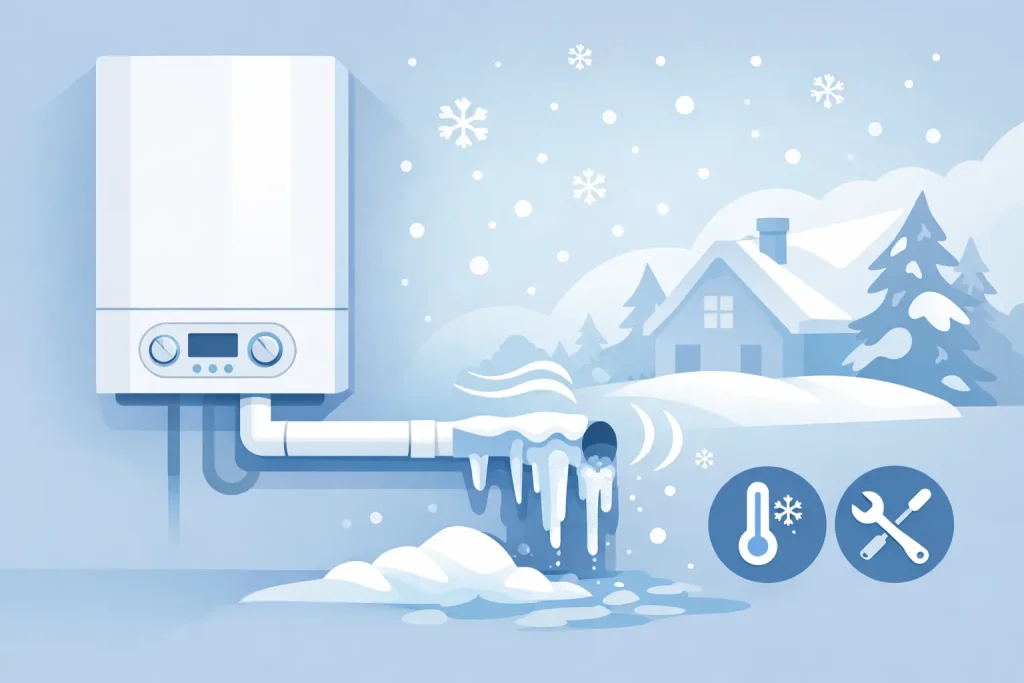
A boiler that stops working during a cold spell is frustrating, particularly when the heating and hot water were fine the day before. Boiler condensate pipe freezing is one of the most common winter causes of a modern condensing boiler shutting down. In many cases it can be dealt with safely, but knowing what not to do matters just as much as knowing how to thaw the pipe.
Why a frozen condensate pipe stops your boiler
Modern condensing boilers recover extra heat from their exhaust gases. As part of that process, they produce a small amount of acidic water known as condensate. This normally runs through a plastic condensate pipe to an internal waste pipe or an outside drain.
When the outside section of pipe is exposed to prolonged low temperatures, the water inside can freeze. Ice creates a blockage, so condensate cannot drain away. Most boilers are designed to detect this and lock out rather than allow water to back up inside the appliance.
You may notice that the boiler has stopped providing heating or hot water, has a warning light showing, or displays a fault code. The exact message varies by make and model. Some boilers may make a gurgling sound before locking out as condensate struggles to pass through the pipe.
A frozen pipe is likely when the fault begins during freezing weather, especially overnight, and the visible condensate pipe runs outside along a wall before entering a drain. It is not the only possible cause of a boiler lockout, though. Low pressure, ignition faults, frozen external pipework and component problems can produce similar symptoms. Do not assume every winter breakdown is caused by ice.
How to check for boiler condensate pipe freezing
First, look for the condensate pipe outside your property. It is usually a white, grey or black plastic pipe, commonly around 22mm or 32mm wide. It may leave the boiler through an external wall, run down the wall, and discharge into a drain, gully or soil pipe.
You may be able to see frost on the pipe, an icy section, or a frozen drain opening. The blockage is often at a bend, near the end of the pipe, or in the lowest exposed section where water collects. If it is safe to do so, gently feel the pipe. A section that feels noticeably colder or solid may be frozen.
Do not climb ladders, lean out of upper-floor windows or remove boiler panels to investigate. If the condensate route is inaccessible, you are unsure which pipe is which, or the boiler is installed in a difficult location, arrange a qualified engineer instead.
Safely thawing a frozen condensate pipe
If the pipe is accessible from ground level and you are confident it is the external plastic condensate pipe, gradual warming is the safest approach. Switch the boiler off at its controls before starting. You do not need to touch any gas components or remove the boiler casing.
Use warm water, not boiling water, poured slowly over the frozen section of pipe. A hot water bottle or a cloth soaked in warm water and held around the pipe can also help. Start at the end nearest the drain and work back towards the boiler, paying particular attention to bends and joints where ice can collect.
Avoid using boiling water. A sudden temperature change can damage plastic pipework, particularly in very cold conditions. Never use a naked flame, blowtorch, heat gun or any sharp object to break up ice. These methods can melt, split or puncture the pipe, create a more expensive repair and introduce unnecessary safety risks.
Once the blockage has thawed, clear away any ice that has formed around the drain. Switch the boiler back on and follow the manufacturer’s reset instructions. Usually, one reset attempt is enough. If the boiler does not restart, displays the same fault again or you can see a leak, turn it off and arrange professional help rather than repeatedly pressing reset.
When not to thaw it yourself
It is better to call an engineer if the pipe is cracked, leaking or badly damaged; if there is standing water around the boiler; if you smell gas; or if the boiler keeps locking out after the apparent ice has cleared. A gas smell requires immediate action: do not operate electrical switches or use flames, ventilate the property if you can do so safely, leave the area and contact the gas emergency service.
Tenants should report the problem promptly to their landlord or managing agent, particularly if the boiler cannot be restored. Landlords and property managers should avoid temporary fixes that leave the condensate route vulnerable for the next cold night. A recurring freeze often points to an installation issue that needs correcting.
Preventing a condensate pipe from freezing again
The best prevention depends on the route and condition of the existing pipe. Short internal runs are naturally less exposed than long external ones, but it is not always practical to change the drainage route without assessing the property and the boiler installation.
External condensate pipework should be suitably sized, correctly sloped and protected from cold conditions. Narrow pipes freeze faster than wider ones, while sagging sections and poor falls allow water to sit in the pipe. Insulation can help, provided it is suitable for outdoor use and fitted continuously around exposed sections. Insulation alone may not solve the problem if the pipe is undersized, poorly routed or discharges where ice builds up.
An engineer may recommend increasing the external pipe diameter, reducing the length of outside pipework, improving the fall, altering an awkward route or connecting to an appropriate internal waste point where feasible. The right answer varies between homes. What works for a ground-floor boiler in a house may not be suitable for a boiler in a top-floor flat or a property with limited internal drainage access.
Before a cold snap, check that the outside drain and gully are clear of leaves, dirt and debris. Keep the boiler serviced in line with the manufacturer’s guidance too. A service will not stop severe weather, but it helps identify faults that could leave you without heating when temperatures drop.
Could it be something other than frozen condensate?
Yes. A boiler can stop for several reasons, and a fault code should be treated as useful information rather than a complete diagnosis. Low system pressure may need topping up, although a repeated pressure drop can indicate a leak that needs attention. A frozen condensate pipe is also different from frozen heating pipes, which can cause more serious water damage if they burst.
If the weather is mild, the condensate pipe is clear, or the boiler will not restart after a careful thaw, arrange a proper diagnosis. Forcing repeated resets can mask the real fault and delay the repair. A qualified heating engineer can check the condensate route, boiler pressure, controls and internal fault indications safely.
For households across North London, prompt attention is particularly valuable when a boiler fault affects young children, older residents or a rental property. D C N Hinds Limited can assess boiler breakdowns, identify whether a frozen condensate pipe is the cause and advise on a lasting repair rather than a short-lived winter workaround.
A little warm water may restore heat when ice is the only problem, but a condensate pipe that freezes repeatedly is asking for a better solution before the next cold spell arrives.
