
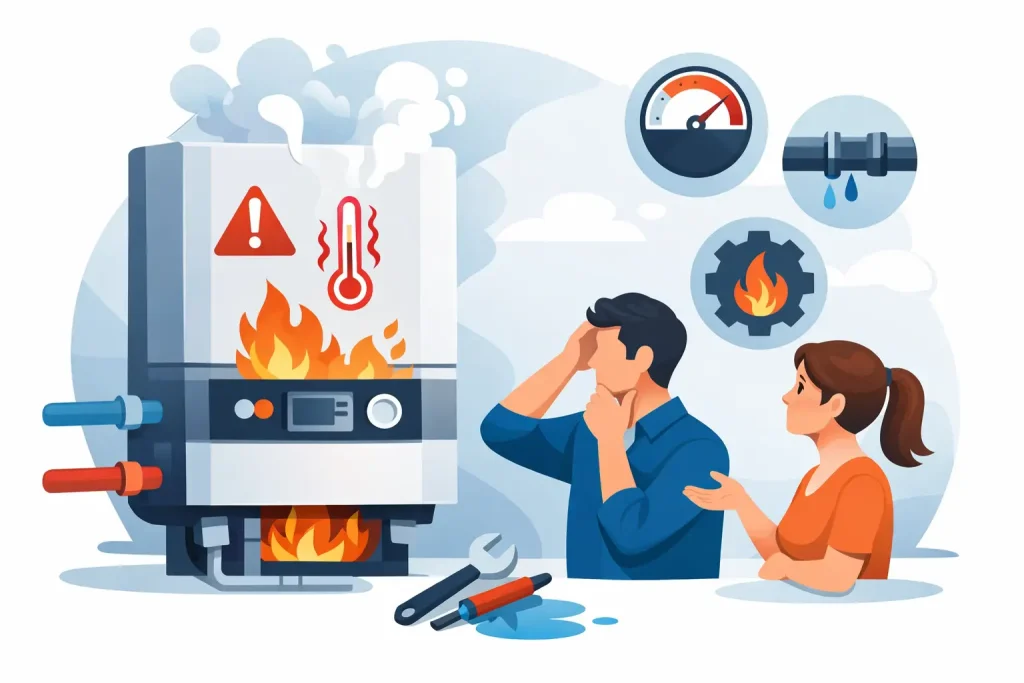
A boiler that is getting too hot is not a fault to ignore, even if it still appears to heat your radiators or provide hot water. Modern boilers have safety controls designed to shut the appliance down before damage occurs, but repeated lockouts, banging noises or rising pressure all need prompt attention. Boiler overheating causes are often linked to restricted water circulation or a failed control, and an engineer can identify the underlying fault safely.
What to do if your boiler is overheating
If the boiler display shows an overheat warning, a fault code, or the casing feels unusually hot, turn the central heating controls down and allow the boiler to cool. Do not remove the boiler casing, attempt to bypass a safety device, or keep resetting the appliance in the hope that it will carry on working. Repeated resets can mask a developing fault and may place extra strain on components.
Check the pressure gauge once the boiler is cool. Most sealed systems normally sit around 1 to 1.5 bar when cold, although the correct setting for your boiler should always be confirmed in its instructions. If the pressure is very high, water is discharging outside from a copper pipe, or the pressure keeps climbing when the heating runs, switch the boiler off and arrange a repair.
If you can smell gas, feel unwell, or suspect a gas leak, do not operate electrical switches or naked flames. Leave the property if necessary and contact the gas emergency service immediately. An overheating fault without a gas smell still needs a qualified heating engineer, particularly where the boiler has locked out more than once.
The most common boiler overheating causes
A boiler produces heat quickly. It relies on a steady flow of water to carry that heat away to radiators, pipework or the hot-water circuit. When that flow slows down, or when the boiler receives the wrong temperature information, the water inside the heat exchanger can become too hot.
A failing or seized circulation pump
The pump moves heated water around the system. If it is sticking, running slowly, blocked by debris or has failed electrically, heat remains inside the boiler instead of travelling through the heating circuit. The boiler may then cut out on its overheat thermostat.
A failed pump can be accompanied by hot pipes close to the boiler but cool radiators elsewhere in the home. Some pumps make a humming sound without circulating water properly. The repair may be as straightforward as replacing a worn component, but the engineer will first need to establish whether the pump itself is at fault or whether something else is restricting the system.
Sludge, debris or a blocked heat exchanger
Older heating systems can collect corrosion debris, commonly called sludge. It settles in radiators, pipework, filters and narrow passages within the boiler. As the restriction worsens, circulation falls and the boiler can overheat.
Cold patches at the bottom of radiators, frequent boiler noises and a system that takes longer to warm up can all point towards contamination. The right remedy depends on where the blockage is found. A filter clean, targeted repair or system cleaning may be appropriate, but simply replacing parts without addressing the debris can lead to the same problem returning.
Closed valves or restricted pipework
Valves beneath the boiler, radiator valves and isolation points should be correctly positioned for normal operation. A valve that has been left closed after previous work can restrict the heating circuit. A blockage in pipework can create similar symptoms.
This is one reason a proper diagnosis matters. Low circulation is not always caused by a broken boiler part, and forcing valves or adjusting unfamiliar controls can create leaks. An engineer will check the flow and return temperatures, system pressure and available circulation before recommending work.
Air trapped in the heating system
Air pockets stop water moving smoothly through radiators and pipes. You may hear gurgling, notice radiators that are cooler at the top, or find that heat is uneven around the property. If enough air collects near the boiler or pump, it can contribute to overheating and lockouts.
Bleeding a radiator may help in some cases, but it is not a complete answer if pressure repeatedly drops or air keeps returning. That pattern can indicate a leak, a pressure issue or another system fault that needs investigating. After bleeding, pressure may also need restoring to the boiler manufacturer’s recommended cold setting.
A faulty thermostat, sensor or control
The boiler uses temperature sensors to regulate its burner. If a thermistor, overheat thermostat, wiring connection or control board is giving inaccurate readings, the boiler may fire for too long or shut down unnecessarily. These faults can look similar to circulation problems from the outside.
A qualified engineer can test the sensor readings and safety controls rather than replacing parts on guesswork. This is especially useful where the boiler overheats despite radiators heating evenly and the pump appearing to operate normally.
Limescale in hard-water areas
Limescale can build up inside a heat exchanger, particularly on boilers working hard to supply domestic hot water in hard-water areas of London. The scale acts as an insulating layer, making it harder for heat to transfer into the water. It can also narrow internal waterways.
Kettling is a common clue. The boiler may make a rumbling, whistling or kettling noise similar to a boiling kettle, especially when hot water is running. Not every noisy boiler has a scaled heat exchanger, however, so the cause should be confirmed before treatment or replacement is proposed.
Signs the fault needs urgent attention
An overheat lockout is the boiler’s way of protecting itself, but it should not become part of your normal routine. Arrange an inspection promptly if the boiler repeatedly switches off, the pressure climbs sharply, or you hear loud banging or kettling sounds.
Water leaking from the boiler or from the pressure relief pipe is also a reason to act quickly. Leaks can damage internal parts and surrounding finishes, while continued high pressure can trigger further safety shut-downs. If heating has stopped during cold weather, do not rely on repeated resets to get through the day. A diagnosis is usually quicker and safer than waiting for a complete breakdown.
How an engineer finds the cause of overheating
A professional boiler diagnosis starts with the fault history rather than one visible symptom. The engineer will check the boiler’s displayed code, system pressure, flow and return temperatures, pump operation, safety devices and the condition of accessible filters and valves. They may also assess whether radiators are circulating heat evenly.
This approach distinguishes a simple circulation issue from a sensor fault, internal blockage or pressure problem. It also helps avoid unnecessary replacement parts. For tenants and landlords, a clear diagnosis provides a practical record of the fault and the work required to restore safe heating and hot water.
Reducing the risk of another overheat fault
An annual boiler service gives an engineer the opportunity to inspect combustion-related components, controls and the general condition of the appliance. It may not prevent every unexpected failure, but it can identify warning signs before a minor circulation or control issue becomes a no-heat call-out.
Keep an eye on boiler pressure, especially after bleeding radiators, and report recurring drops or rises rather than topping up the system repeatedly. If radiators have cold spots, take a long time to heat, or make persistent noises, have the heating system checked before the boiler begins locking out. Homes with older systems may benefit from advice on cleaning, filtration or suitable treatment to protect the boiler.
For households, tenants and landlords across North London, a prompt boiler repair can prevent a heating interruption from becoming a larger problem. D C N Hinds Limited can assess overheating faults, explain the repair in plain language and provide a free quotation before work begins. If your boiler has shut down on an overheat warning, leave it off to cool and arrange a safe, professional diagnosis rather than taking chances with an essential appliance.
