
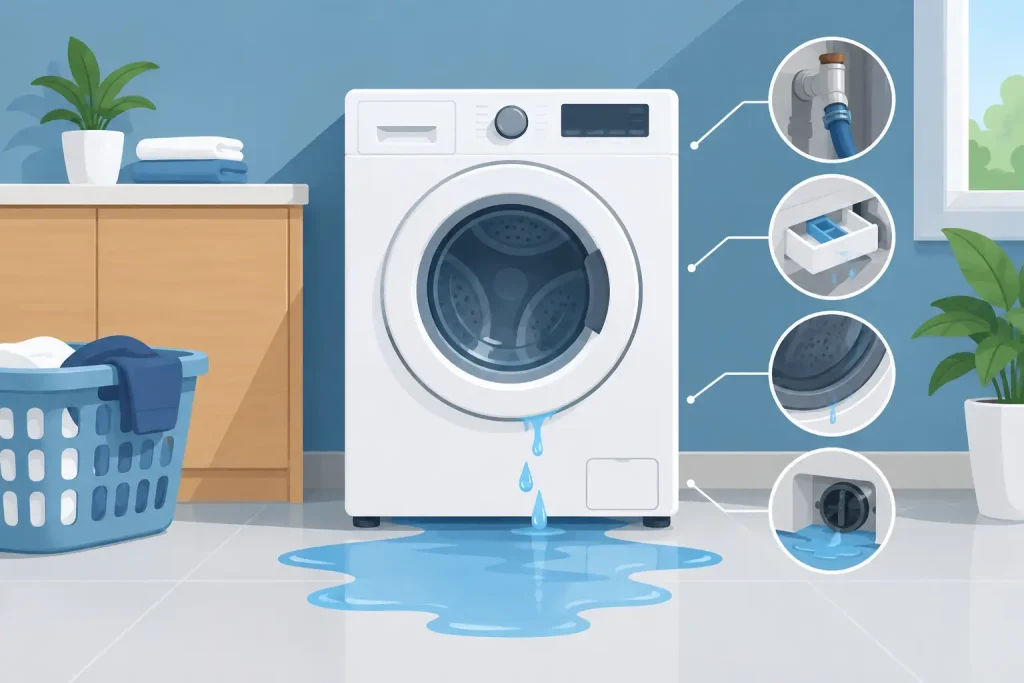
A puddle beside the washing machine is easy to dismiss after a busy wash day, but water can quickly damage flooring, cupboards and the property below. Understanding what causes washing machine leaks helps you act early, limit the mess and arrange the right repair rather than guessing at the fault.
The first priority is safety. Stop the cycle, switch the machine off at the socket and turn off the water supply valves if water is still escaping. Avoid using the appliance again until you know where the leak is coming from. A small drip can become a much larger leak during a high-pressure fill or fast spin cycle.
What Causes Washing Machine Leaks?
A washing machine can leak while it fills, washes, drains or spins. The timing matters because it narrows down the likely cause. For example, water appearing immediately after starting a programme often points to an inlet hose or detergent drawer issue. Water released near the end of a cycle is more likely to involve the drain hose, pump or filter.
Not every puddle means an internal component has failed. An overloaded drum, excess detergent or a loose hose connection can all produce a leak. However, persistent leaks need proper diagnosis, particularly where the machine is built into a kitchen unit or installed on an upper floor.
Loose, split or worn inlet hoses
The inlet hoses bring cold water, and sometimes hot water on older installations, into the appliance. They connect at the back of the machine and to the water supply valves. Over time, rubber seals can flatten, hose connections can loosen and the hose itself can become brittle or split.
Check for moisture around both ends of each hose, but do not overtighten fittings in an attempt to stop a leak. A damaged washer or cross-threaded connection will not be fixed by force. If the leak appears only while the machine fills, the inlet hose connections are one of the first places an engineer will inspect.
A damaged door seal
Front-loading machines rely on a flexible rubber door seal, also called a gasket, to keep wash water inside the drum. Small objects left in pockets, such as coins, hair grips or screws, can become trapped and tear the seal. Mould, detergent residue and age can also degrade the rubber.
Look carefully around the inside edge of the seal for a split, hole or object lodged in a fold. Water leaking from the front of the machine, especially during tumbling or spinning, often indicates a door seal problem. Replacement is usually more reliable than attempting a temporary patch.
Too much detergent or the wrong product
Using more detergent than the manufacturer recommends can create excessive foam. The suds can force water out through the detergent drawer or door area, leaving what looks like a major leak on the floor. This is particularly common with concentrated products, soft water and quick washes with a small load.
Only use detergent intended for automatic washing machines and measure it for the load size and local water hardness. If the appliance leaks once but works normally afterwards, run an empty rinse cycle to clear excess foam. Repeated overflow from the drawer may also mean the drawer or its internal channels need cleaning.
A blocked detergent drawer or dispenser housing
Powder detergent, fabric conditioner and limescale can build up in the drawer and the channels behind it. Instead of flowing neatly into the drum, water may splash or overflow from the front of the dispenser.
Remove the drawer if the model allows it, rinse away residue and clean the compartment carefully. It is worth checking that the machine is level too. If it tilts forwards, water can escape more easily from the drawer during filling. A drawer that remains blocked or leaks after cleaning may have a damaged dispenser housing that requires repair.
A blocked pump filter or faulty drain pump
Most washing machines have a pump filter near the lower front of the appliance. This catches lint, buttons, coins and other debris before water reaches the drain pump. When it becomes blocked, the machine may fail to drain properly, leak from the filter cover or stop with water left in the drum.
Place towels and a shallow tray beneath the filter area before opening it, as trapped water may come out. If the cover does not seal properly, the filter is damaged or water continues to leak from underneath, stop using the appliance. A failed drain pump or a damaged internal hose can cause similar symptoms and needs a competent repair.
Drain hose problems
The drain hose carries used water from the machine to the waste pipe. It may leak because it has split, been crushed behind the appliance or worked loose from its connection. A poorly positioned hose can also cause water to back up or siphon out at the wrong point in the cycle.
Leaks caused by drainage issues generally appear when the machine empties or spins. Check that the hose is not kinked and that it has not slipped from the standpipe or waste connection. Do not push the hose too far down a standpipe, as this can affect drainage and make future inspection difficult.
Internal hose, tub or pump faults
If water is coming from underneath the machine but the external hoses are dry, the cause may be inside the cabinet. Internal hoses can loosen or crack, pump seals can fail, and the outer tub can occasionally develop damage. These faults are not always visible without removing panels.
A leak from beneath the appliance may only occur when the drum is full or when the pump starts. That pattern is useful information for a repair engineer. Continuing to run the machine in the hope that it will settle down risks further water damage and can turn a straightforward part replacement into a more expensive problem.
An unlevel machine or an overloaded drum
A washing machine should stand firmly with all feet supporting its weight. If it rocks or leans, vibration during spin can move hoses, cause water to splash from the dispenser and put extra strain on the door seal. An overloaded drum can have a similar effect, particularly with bulky towels, bedding or a single heavy item.
Try gently rocking the machine when it is switched off. If it moves, the adjustable feet may need setting correctly. Reduce very large loads and follow the manufacturer’s capacity guidance. This will not repair a split seal or hose, but it can prevent avoidable leaks and excessive movement.
How to Find the Source of a Washing Machine Leak
Dry the floor and the exterior of the machine first, then run a short supervised cycle only if it is safe to do so and there is no obvious serious leak. Watch from a safe distance and note when water appears. Is it during filling, while the drum turns, at drainage or only during the final spin?
Check the visible hose connections, detergent drawer, door seal and filter cover. Use a torch to inspect behind and beneath the appliance, but do not pull a heavy machine out by its hoses or tip it forwards. Built-in appliances can be especially awkward to move without damaging cabinetry, pipework or flooring.
These details make diagnosis faster: where the water appears, how much comes out, which programme was running and whether there are any unusual noises or error messages. Photographs of the affected area can also help if you are responsible for a rental property and need to report the problem promptly.
When to Call a Washing Machine Repair Engineer
Call for professional help if water is escaping quickly, the machine leaks from underneath, the door seal is torn, a hose is damaged, or cleaning the filter and drawer has not solved the problem. You should also stop and seek assistance if the appliance trips its power supply, smells unusual or has been sitting in standing water.
For tenants, report the leak to the landlord or managing agent as soon as possible, while taking reasonable steps to limit damage. Landlords and property managers should treat an active washing machine leak as time-sensitive, especially in flats where water may affect another home.
D C N Hinds Limited provides practical washing machine diagnosis and repair for households across North London. A qualified engineer can identify whether the fault is a replaceable seal, pump, hose, filter assembly or another component, then explain the repair clearly before work proceeds.
A washing machine leak rarely improves by itself. Catching it early, keeping the area dry and getting the right fault diagnosed gives you the best chance of protecting your home and getting laundry back to normal without unnecessary disruption.
