
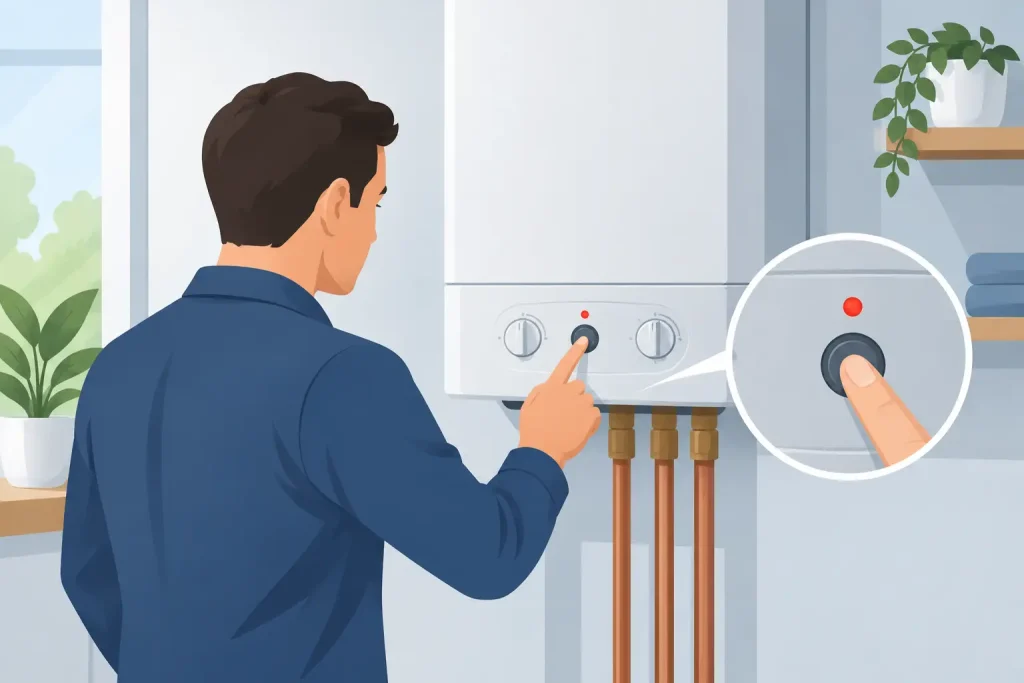
A boiler lockout always seems to happen at the worst possible time: before the school run, on a cold evening or when a tenant has just reported no heating. To reset boiler lockout safely, treat the reset button as a final step after a few simple checks – not as a way to force the boiler to keep running when something is wrong.
A lockout is the boiler protecting itself. It has detected a fault that could affect safe operation, ignition, water circulation or flue performance, and it has stopped rather than continuing to try. A single reset may clear a temporary interruption. Repeated lockouts need proper diagnosis by a qualified Gas Safe engineer.
What boiler lockout means
Most modern boilers show a fault code, flashing light or warning symbol when they lock out. The exact message varies by manufacturer, but the principle is the same: the boiler has failed one of its operating checks and will not fire until the issue is cleared or the appliance is reset.
Common triggers include low system pressure, a temporary interruption to the gas supply, ignition failure, a frozen condensate pipe in cold weather, poor circulation or a component fault. Sometimes the cause is straightforward. Sometimes the code points to a problem that needs testing rather than guessing.
Before touching any controls, note the fault code and the make and model of the boiler. A photograph of the display can save time if you need to arrange a repair.
Safety checks before you reset boiler lockout
First, check for signs that mean you should not reset the appliance at all. If you can smell gas, leave the property, avoid using electrical switches or naked flames, and call the National Gas Emergency Service on 0800 111 999 from a safe place. Do not return until you have been told it is safe to do so.
If a carbon monoxide alarm is sounding, or anyone has headaches, dizziness, nausea or unusual tiredness while the boiler is operating, get everyone into fresh air and seek urgent advice. Turn the boiler off only if this can be done safely on the way out. Carbon monoxide has no smell or colour, so an alarm should always be taken seriously.
If there are no warning signs, look at the boiler pressure gauge. On many sealed central-heating systems, pressure is usually around 1 to 1.5 bar when cold, though the correct range depends on the manufacturer and system. A pressure reading close to zero can cause a lockout. If you know how to repressurise your particular boiler and have the manufacturer’s instructions, follow them carefully. If you are unsure, stop there and arrange an engineer rather than experimenting with valves.
Also check whether other gas appliances are working, if you have them, and whether the boiler display has power. Do not remove the boiler casing or attempt to access internal parts.
How to reset boiler lockout once
The reset control may be a button, a dial position or an on-screen option. It is commonly marked Reset, R or with a circular arrow. Your boiler manual gives the correct method, but the usual process is simple:
- Turn the boiler control to the reset position or press and hold the reset button as instructed by the manufacturer.
- Wait for the boiler to complete its restart sequence. This can take a few minutes.
- Check whether the fault code has cleared and whether heating or hot water returns normally.
- Listen for unusual banging, whistling or repeated clicking, and watch for the fault code returning.
One reset is reasonable where the cause appears temporary and there are no safety concerns. Do not keep resetting the boiler if it locks out again. Multiple resets can mask an underlying problem and leave you without heating again shortly afterwards.
A boiler that restarts but then cuts out during a shower, only works intermittently, loses pressure repeatedly or makes new noises still needs attention. The reset has not fixed the fault – it has only allowed the boiler to attempt another cycle.
Check the pressure and condensate pipe carefully
Low pressure is one of the more familiar causes of a lockout, particularly after radiators have been bled or a system has had a small leak. If the gauge has dropped below the recommended level, the boiler may not run. Repressurising can restore operation, but pressure should not continually fall. A repeated loss of pressure may indicate a leak, a faulty expansion vessel or another system issue that requires investigation.
During cold spells, a frozen external condensate pipe can also stop a condensing boiler. You may see a relevant code, hear gurgling, or find the boiler locks out soon after trying to start. If the pipe is clearly accessible and safe to reach, it can often be thawed gently with warm water. Never use boiling water, a flame or sharp tools, and do not climb or stretch to reach pipework. If the pipe is not safely accessible, call for assistance.
Once it has thawed, reset the boiler once. If it continues to lock out, there may be a blockage or another fault rather than ice alone.
When a boiler fault needs an engineer
A fault code is useful, but it is not a diagnosis on its own. Several different causes can lead to similar lockout messages, and safe testing of gas, combustion, ignition and internal components must be carried out by a Gas Safe registered engineer.
Arrange professional help if the boiler will not reset, locks out again after one reset, has a leak, shows a persistent pressure problem or has stopped producing hot water and heating. The same applies if you notice soot marks, a yellow or lazy flame on a visible gas appliance, unusual smells, or noises that were not present before.
For landlords and property managers, a recurring lockout should be dealt with promptly rather than left for the occupier to manage. Apart from the disruption of no heating or hot water, repeated resets can make it harder to establish the pattern of the fault. Keeping a record of the code, time, weather conditions and whether hot water or heating was being used helps an engineer diagnose efficiently.
Avoid these common reset mistakes
The most common mistake is pressing reset several times in quick succession. Give the boiler time to complete a full attempt, then stop if it fails. Another is topping up pressure without checking the manufacturer’s guidance, which can lead to over-pressurising the system.
Do not take the boiler cover off, adjust internal settings, tamper with the gas supply or try to bypass a safety device. These are not household checks. They can create a dangerous situation and may affect the appliance warranty.
It is also worth avoiding a wait-and-see approach when the boiler is regularly losing pressure or locking out. A short call-out is often less disruptive than losing heating completely on a colder day.
Fast help for a boiler lockout in North London
If your boiler has locked out and a single safe reset has not restored reliable heating or hot water, D C N Hinds Limited can assess the fault and explain the repair needed clearly. Our engineers support households, landlords and property managers across North London with practical boiler diagnostics, repairs and servicing, aiming to attend the same day or the following day where possible.
Keep the fault code to hand, let us know whether the boiler has restarted at all, and mention any pressure reading or leak you have seen. That small amount of information helps us arrive prepared and focus on getting your home comfortable again.
