
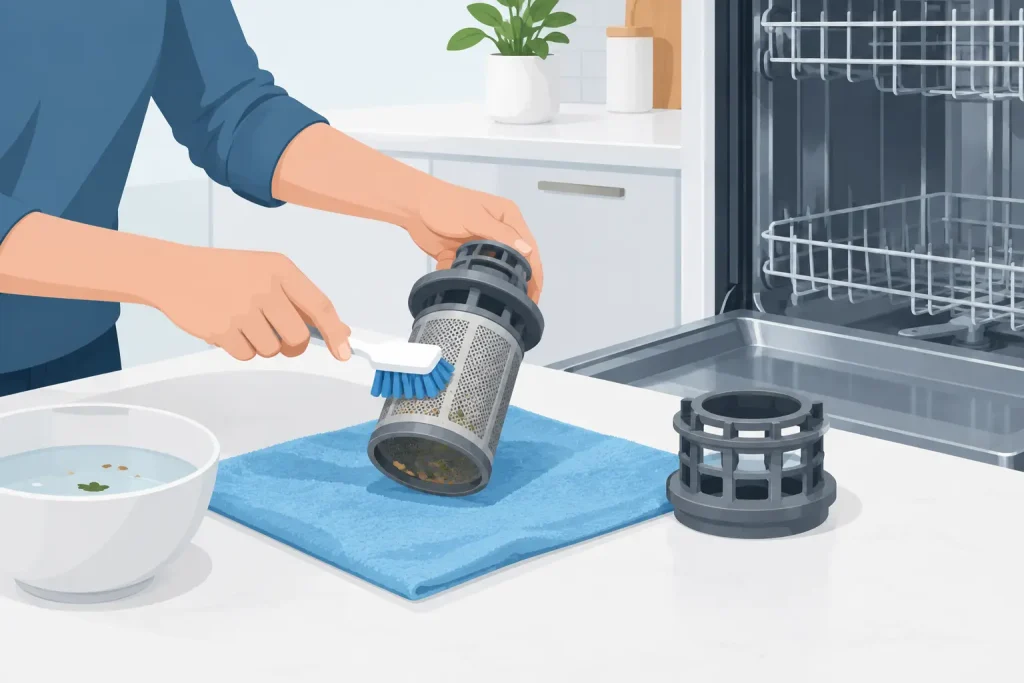
A dishwasher that leaves gritty plates, smells stale when opened or holds water in the bottom often has one simple cause: a blocked filter. Knowing how to clean dishwasher filter properly can restore washing performance and prevent food debris from building into a more difficult drainage problem.
Most household dishwashers have a filter assembly at the base of the tub, beneath the lower spray arm. It is designed to catch food particles and other debris before they can reach the pump. Cleaning it is usually a straightforward job, but forcing a stuck part or ignoring standing water can make matters worse. Take a few minutes to do it carefully.
When Does a Dishwasher Filter Need Cleaning?
A filter should normally be checked every month, particularly in a busy household. If you rinse plates thoroughly before loading, it may need less frequent attention. However, even a lightly used dishwasher collects grease, small food particles and detergent residue over time.
The most common warning signs are unpleasant odours, cloudy glasses, specks of food left on crockery, poor draining or water sitting in the bottom after a programme finishes. A dishwasher may also sound different while draining because the pump is working harder against a partial blockage.
Do not assume the filter is the only cause. Poor results can also come from blocked spray arms, unsuitable detergent, low rinse aid or a drainage fault. Cleaning the filter is a sensible first check because it is safe, quick and costs nothing.
How to Clean Dishwasher Filter Safely
Start with the dishwasher switched off. For an integrated model, use the controls to turn it off rather than pulling on the door or attempting to move the appliance. Open the door fully and remove the lower rack, setting it aside where it will not scratch the floor.
At the bottom of the dishwasher, locate the circular or cylindrical filter. On many models, it twists anti-clockwise before lifting out. Some have a flat mesh screen beneath it, while others use a combined coarse and fine filter. If it does not release easily, stop and check the appliance manual or look closely for a locking tab. The filter should come out with gentle pressure, not force.
Hold the filter over the sink and remove any visible debris. You may find softened food, paper labels, broken glass, bones, fruit pips or pieces of packaging. Take particular care if there is glass in the filter. Use gloves and do not put fingers into the sump area without checking it first.
Rinse the filter under warm running water. A soft washing-up brush or an old soft toothbrush is useful for lifting grease from the mesh and around the edges. Use a small amount of washing-up liquid if needed, then rinse it thoroughly. Avoid sharp tools, wire brushes and harsh cleaners, as these can damage the fine mesh or leave residue behind.
If the filter is heavily coated in grease, leave it to soak in warm, soapy water for ten to fifteen minutes before brushing it. Very hot water is unnecessary and may distort some plastic parts. A steady clean is better than an aggressive one.
Check the filter housing as well
Before refitting the filter, wipe around the filter housing with a damp cloth. Look into the opening for loose debris, but do not reach deep into it. If you can see an obstruction close to the surface, remove it carefully with gloves or suitable tweezers.
A small amount of water beneath the filter can be normal. Water covering the base of the dishwasher after a completed cycle is not. In that case, remove what you can with a sponge or cup before cleaning, then check whether the filter or nearby area is visibly blocked.
Place the filter back in its original position and turn it clockwise until it locks. It needs to sit flat and secure. A loose or incorrectly fitted filter can allow debris into the pump area and may affect washing performance. Refit the lower rack and run a short rinse cycle to make sure water circulates and drains normally.
What Not to Put Down the Dishwasher
Dishwashers are built to deal with normal traces of food, not to process leftovers. Scraping plates into the bin before loading will reduce strain on the filter and help keep the appliance hygienic. You do not need to pre-rinse every item under the tap, but larger scraps should be removed.
Certain materials are especially likely to cause trouble. Rice, pasta, coffee grounds, eggshell, grease, cooking fat and sticky labels can all collect in the filter or interfere with drainage. Broken glass should never be left in the machine, even if it seems contained in a cup or bowl.
If you regularly wash pans with heavy grease, clean the filter more often. Grease can coat the mesh gradually, so it may not look blocked at first glance. The dishwasher can still struggle to drain or leave a film on dishes.
Keep the Rest of the Dishwasher Clean
A clean filter works best alongside a few basic maintenance checks. Wipe the door seal with a damp cloth to remove residue from the folds. Check the lower spray arm holes for trapped food or limescale, especially if dishes are not being reached evenly by water.
Every month or two, run an empty hot cycle with a dishwasher cleaner approved for your appliance. Follow the product instructions and do not add extra washing-up liquid, which can create excessive foam. In hard-water areas, limescale can build up more quickly, so a suitable dishwasher salt and rinse aid routine matters as well.
It is worth leaving the door slightly ajar after a cycle when practical. This allows moisture to escape and reduces the chance of stale smells developing inside the machine. If the appliance is in a rental property or is used by several people, a simple monthly filter check can prevent avoidable call-outs.
Why a Clean Filter May Not Solve a Drainage Problem
If you have cleaned the filter and water still remains in the dishwasher, the fault may be beyond the part you can safely access. A blocked drain hose, pump obstruction, faulty drain pump or control issue can all produce similar symptoms. Repeatedly restarting the dishwasher will not clear a mechanical fault and may leave dirty water sitting inside for longer.
Stop using the appliance if it leaks, trips its supply, makes a harsh grinding noise, or repeatedly fails to drain. Avoid dismantling panels or attempting to access the pump unless you are qualified and have the correct manufacturer guidance. This is especially important in a tenanted home, where an incorrect repair can create a larger maintenance issue.
For households across North London, D C N Hinds can inspect dishwasher drainage and washing faults, explain the problem clearly and provide a free quotation before repair work begins. Prompt diagnosis is often the quickest route when a cleaned filter has not brought the dishwasher back to normal.
Common Questions About Dishwasher Filters
Can I run the dishwasher without its filter?
No. The filter protects the pump and drainage system from debris. Running a cycle without it can allow food particles and other objects into parts of the machine that are harder and more costly to repair.
How often should I clean it?
Monthly suits most homes. Check it every one to two weeks if the dishwasher is used daily by a large household, if food is not scraped from plates, or if greasy cookware is washed frequently.
Can I use vinegar to clean the filter?
Warm water and a little washing-up liquid are usually enough. Vinegar may help with light mineral deposits on some removable parts, but it should not be treated as a cure for blocked drainage or used in a way that conflicts with the appliance manufacturer’s instructions.
A clean dishwasher filter is a small bit of maintenance that can make a noticeable difference to daily life. If the machine is still leaving water, smells or dirty dishes after this check, arrange a proper diagnosis rather than letting a minor fault turn into a disruptive breakdown.
