
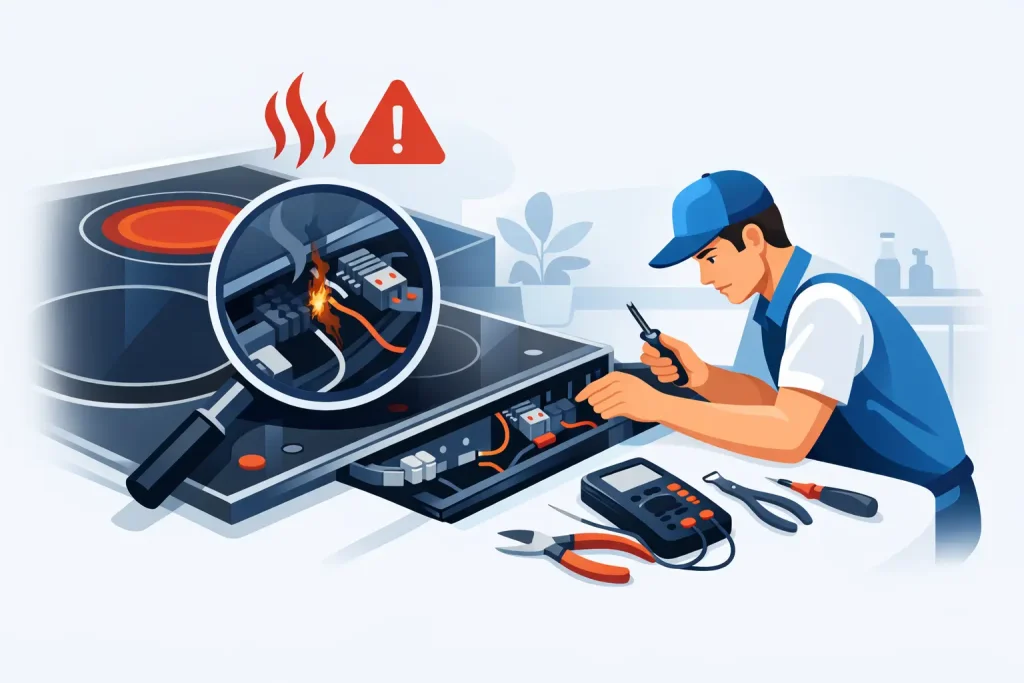
A hob failure rarely happens at a convenient time. One ring may stop heating while dinner is on the go, the touch controls may refuse to respond, or a flashing display may leave the whole appliance unusable. Professional electric hob repair is often the quickest route back to a working kitchen, but the symptoms matter. Some faults are straightforward component repairs, while others mean the hob should be switched off immediately and assessed safely.
For households, tenants and landlords, the priority is simple: avoid making the problem worse, protect everyone in the property and get a clear diagnosis before paying for unnecessary work.
What an electric hob fault can tell you
Electric hobs use different systems depending on the model. A ceramic hob generally heats an element beneath the glass, while an induction hob uses a magnetic field to heat a suitable pan. Both can develop faults in their heating zones, controls, sensors or internal components, but the behaviour of the hob can point an engineer in the right direction.
If one cooking zone does not heat but the others work normally, the issue may be isolated to that zone or its controls. A hob that switches on but heats weakly, cycles unexpectedly or turns itself off may have a sensor or overheating problem. Where the display is blank and the appliance will not respond at all, a control or power-related fault may be involved.
Induction hobs can also appear faulty when the pan is the real issue. The base needs to be magnetic, flat and close enough in size to the marked cooking zone. A pan that is too small, warped or unsuitable may trigger a symbol or cause the zone not to start heating. That is worth checking before arranging a call-out, particularly if the hob works with some pans but not others.
Safe checks before arranging electric hob repair
There are a few sensible checks that do not involve taking the appliance apart. First, make sure the control lock or child-lock function has not been activated. The method varies by model, but the hob handbook or the symbols on the control panel should make this clear.
If the hob has displayed an error code, take a photo before switching it off. The code, make and model number can help an engineer prepare for the visit and identify likely parts. It is also useful to note whether the fault affects every zone or just one, and whether it began suddenly or has become worse over time.
For an induction hob, test one known suitable pan on another working zone. For a ceramic model, allow it to cool fully, then clean away heavy spills using a hob-safe method. Burnt-on food can interfere with touch controls and can make it difficult to see damage in the glass.
Do not remove the hob from the worktop, open the underside or attempt to replace internal components yourself. Even when a fault seems minor, electric hobs contain parts that need safe handling and correct diagnosis. A failed repair can damage the appliance further and may create a safety risk.
When an electric hob repair needs urgent attention
Some faults are inconvenient. Others should not be ignored until a more suitable time. Stop using the hob and arrange professional help promptly if you notice any of the following:
- A burning smell, smoke, sparking or unusual crackling sounds.
- A cracked, chipped or shattered glass surface.
- Controls that operate on their own or a zone that remains hot when switched off.
- Repeated loss of power when the hob is used.
- Signs of scorching around the controls, edges or beneath pans.
A cracked ceramic or induction glass surface is particularly important. The hob may still appear to work, but moisture and spills can enter through damaged glass. Continuing to cook on it can increase the risk of further damage. Leave it switched off and avoid placing weight on the affected area.
Likewise, do not keep resetting or repeatedly switching on a hob that gives off a burning smell. A qualified appliance engineer can assess the appliance and advise whether a repair is safe and worthwhile.
How a professional hob diagnosis works
A good repair starts with identifying the actual fault rather than replacing parts by guesswork. An engineer will usually check the appliance make and model, ask about the symptoms and inspect the hob for visible damage. They can then assess the relevant components, such as heating elements, touch-control assemblies, temperature limiters, cooling fans or power modules.
The best repair is not always the one with the lowest first cost. For example, replacing a single faulty element in an otherwise reliable ceramic hob can be very good value. A hob with multiple intermittent faults, badly damaged glass and an expensive control module may be less economical to repair. The age, condition and availability of replacement parts all affect the decision.
Clear advice matters here. You should know what has failed, what work is proposed and whether the repair offers a sensible expected life for the money being spent. A fair quotation gives you the information to decide without pressure.
Electric hob repair or replacement?
Repair is often the preferred option when the rest of the hob is in good condition. A single zone fault, failed switch, worn touch control or sensor issue can frequently be resolved without replacing the whole appliance. Repair also avoids the disruption of choosing a new model that must fit the existing worktop opening.
Replacement can be the better choice where the glass is extensively damaged, key parts are no longer available or the repair cost is close to that of a suitable new hob. This is not a rule that applies to every appliance. A premium hob may justify a larger repair because of its original quality and features, while an older basic model may not.
For rented homes, landlords should also consider the practical impact on tenants. A clear diagnosis and prompt decision can prevent a cooking problem becoming an extended complaint. Keeping the make, model and repair details on record also helps with future maintenance planning.
Help with a faulty hob in North London
When cooking facilities are limited, waiting weeks for an appointment is frustrating. D C N Hinds Limited provides responsive domestic appliance support across North London and nearby areas, with the aim of attending the same day or the following day where possible. Sharing the hob make, model, error code and fault symptoms when you request a free quotation can help make the visit more efficient.
Whether your hob has one cold ring, an unresponsive control panel or a visible crack, acting early is usually the practical choice. Switch it off if there are any signs of damage or overheating, keep the details to hand and arrange a professional assessment so you can get back to cooking with confidence.
