
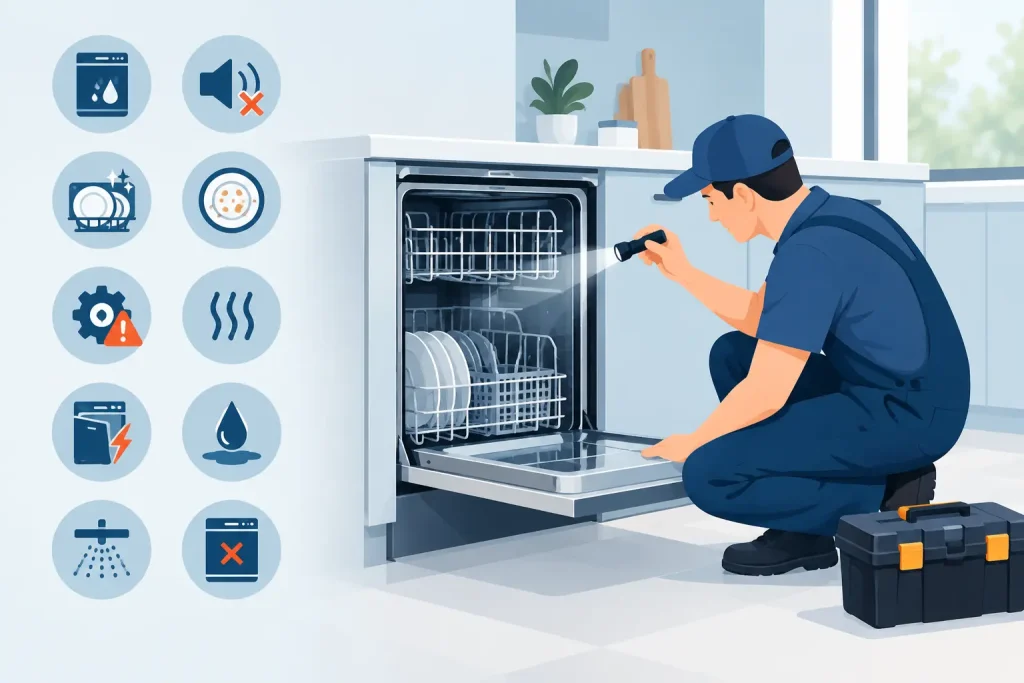
A dishwasher that finishes a cycle with cloudy glasses, a puddle beneath the door or a cold load of plates is not simply being inconvenient. These are dishwasher repair signs that can point to a blocked filter, worn seal, failed heating component or drainage fault. Acting early can prevent water damage, unpleasant smells and the disruption of losing an essential kitchen appliance.
10 dishwasher repair signs to take seriously
1. Water is left in the bottom after a cycle
A small amount of water around the filter area can be normal, but standing water across the bottom of the dishwasher is not. Food debris, grease and broken fragments can block the filter or pump area, while a kinked waste hose may prevent the machine from emptying properly.
Start by switching the dishwasher off, removing the lower basket and checking the filter for visible debris. If it still will not drain after cleaning, avoid repeatedly running cycles in the hope that it will clear itself. A drainage fault can worsen, and forcing the machine to operate may leave dirty water backing up into the appliance.
2. Plates, glasses and cutlery come out dirty
Poor cleaning is one of the most common signs of a developing fault, although it is not always a repair issue. Overloading the baskets, blocking the spray arms or using the wrong programme can all leave residue behind. Check that the spray arms can turn freely and that their holes are not blocked.
If the dishwasher is loaded correctly, has sufficient detergent and rinse aid, and still leaves food or a gritty film on everything, it may have a circulation problem or heating fault. Water that is not reaching the right temperature will struggle to break down grease and detergent properly.
3. The machine is leaking onto the floor
Any water outside the dishwasher deserves prompt attention. A leak may come from a damaged door seal, loose hose connection, split internal pipe or an issue with the pump. Sometimes the cause is as simple as a badly positioned item preventing the door from closing fully, but it should not be assumed.
Turn the appliance off and avoid using it until the source is known. Mop up the water to protect flooring and kitchen units. If the leak is recurring or appears from underneath the dishwasher, arrange a professional diagnosis rather than dismantling components yourself.
4. There is a burning smell, smoke or repeated tripping
Stop using the dishwasher immediately if you notice a burning smell, smoke, scorching, or the power cutting out when it starts. These symptoms can indicate a failed component, damaged wiring within the appliance or water reaching an area it should not.
Do not continue testing the machine or try to bypass the problem. Switch it off at the appliance and seek qualified repair support. This is one of the dishwasher repair signs where safety must come before getting the dishes done.
5. The dishwasher makes new or unusually loud noises
Dishwashers make some normal operational sounds, including water moving, spray arms turning and the pump running. Grinding, harsh buzzing, rattling or loud knocking is different, particularly if the noise has appeared suddenly.
A small item may have dropped into the filter area, a spray arm could be catching on a dish, or a pump may be struggling. Check for obvious obstructions once the appliance is switched off. If the noise continues with an empty or correctly loaded machine, it needs investigation before a minor obstruction becomes a more costly repair.
6. The door will not close, latch or stay shut
A dishwasher cannot operate safely if the door is not closing correctly. A misaligned basket, damaged latch, worn hinge or faulty door catch can stop a cycle from starting or cause it to pause unexpectedly.
Never force the door closed. First check whether a large plate, utensil or basket is catching. If there is no obvious obstruction, a repair engineer can assess the latch and alignment. This is especially worthwhile where the machine starts but stops as soon as the door is moved.
7. The dishwasher is cold at the end of the cycle
Most programmes use heated water and a drying stage. If items are consistently cold, greasy and wet at the end of a normal cycle, the machine may not be heating as it should. You might also notice detergent tablets not dissolving fully.
A low-temperature wash can look like a detergent problem, but changing products will not resolve a failed heating component or sensor. It depends on the programme selected, as eco cycles can run cooler and take longer. However, a sudden change in results across several cycles is a good reason to book a diagnosis.
8. Bad smells return soon after cleaning
A stale or unpleasant smell often comes from food residue trapped in the filter, spray arms or drain area. Cleaning the filter regularly and running an appropriate maintenance clean can help. It is also sensible to leave the door slightly ajar after use, where practical, so moisture does not sit inside.
If odours return quickly despite cleaning, the machine may not be draining fully. Dirty water left in hidden areas can cause smells and affect washing performance. A repair visit can identify whether a blocked hose, pump problem or other drainage issue is behind it.
9. The display shows an error code or the cycle stops
Error codes are designed to flag a fault, but the meaning varies by make and model. Take a note or photograph of the code before switching the dishwasher off. This can give the engineer a useful starting point and may speed up diagnosis.
A cycle that stops mid-wash without a clear code can be caused by water supply, drainage, heating or door-latch issues. Resetting the appliance once may be reasonable if the manufacturer’s instructions allow it. If the code returns, or the cycle repeatedly fails, further resets are unlikely to provide a lasting answer.
10. The dishwasher will not switch on at all
When there are no lights, sounds or response from the controls, check the simple causes first. Make sure the door is properly closed and that the appliance has not been switched off at its local isolator. Avoid pulling the dishwasher out or removing panels to investigate internal parts.
Complete failure to start can result from a control issue, door lock fault or another component failure. A qualified appliance engineer can test the machine safely, explain the likely repair, and provide a clear quotation before work begins.
When a simple check is enough and when to call for help
Some issues can be resolved with basic care: cleaning the filter, removing a visible obstruction and checking that the spray arms are free to rotate. These steps are safe only when the dishwasher is switched off and cool. They are maintenance checks, not a substitute for repair work when water is leaking, the appliance is overheating or an error keeps returning.
Call for professional help promptly if there is a leak, burning smell, repeated power loss, standing water that will not drain, or a fault that stops normal washing. For tenants and landlords, quick action also helps prevent avoidable damage to kitchen flooring, cabinets and neighbouring properties.
For households across North London, D C N Hinds Limited provides practical dishwasher diagnosis and repair with a focus on quick attendance, clear communication and safe workmanship. Having the fault assessed early can often mean replacing the right part rather than waiting for the appliance to fail completely.
A dishwasher does not need to be completely dead before it deserves attention. If its performance has changed, treat that change as useful information, stop using it where safety is in doubt, and arrange help before a small fault becomes a kitchen-wide problem.
