
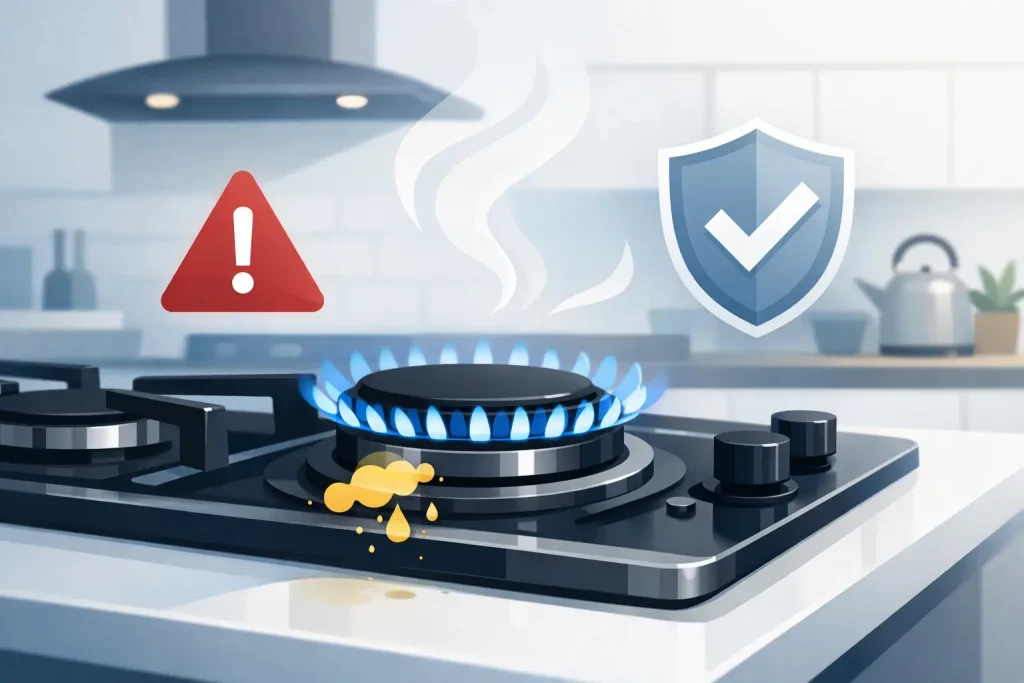
A hob that appears to be leaking is not something to cook around and deal with later. If you are asking, can I use a leaking hob, the safe answer is usually no – at least not until you know exactly what is leaking and why. A gas smell, a hiss near a burner, liquid beneath the hob or a damaged component can each need a different response, but none should be ignored.
The priority is to make the appliance safe, avoid creating a spark or flame, and arrange the right repair. Acting promptly can protect your household and may prevent a smaller fault becoming a more costly repair.
Can I Use a Leaking Hob if I Smell Gas?
No. Do not use a gas hob if you can smell gas, hear hissing, or suspect gas is escaping from the appliance or its connection. Gas is highly flammable, and even a faint smell should be treated seriously.
Turn the hob controls to the off position if it is safe to do so. Open doors and windows to ventilate the room. Do not light matches, smoke, use a lighter, or operate electrical switches and appliances nearby. That includes avoiding the extractor fan, as switching it on could create a spark.
If you can safely access the gas isolation valve for the hob, turn it off. If the smell is strong, you feel unwell, or gas is continuing to escape, leave the property and call the National Gas Emergency Service on 0800 111 999 from outside. Do not return until you have been told it is safe.
Once the immediate risk has been addressed, a Gas Safe registered engineer should inspect the hob. They can identify whether the issue is at a burner, control valve, injector, pipe connection or another component, then advise whether a repair is practical.
A Gas Smell Is Not Always a Leak – But It Still Needs Attention
Sometimes a burner has not lit properly, leaving a small amount of unburnt gas in the room. In that case, turn every control off, ventilate the kitchen and wait for the smell to clear completely before attempting to use the hob again.
However, do not assume this is the cause if the smell returns when the hob is off, appears repeatedly, or seems to come from underneath the appliance. A burner that fails to light consistently can itself need cleaning, adjustment or repair. Continued attempts to ignite it are not a safe workaround.
A correctly operating gas hob should light promptly and burn with a steady blue flame. Yellow or lazy flames, clicking that continues after ignition, soot on pans, or flames lifting away from the burner are all signs that the appliance needs professional attention. They do not always mean there is a gas leak, but they do mean the hob should be checked.
What if the Hob Is Leaking Water or Another Liquid?
A spill on the surface is usually not a fault. Turn the hob off, allow it to cool where necessary, and wipe it up carefully. Do not let water or food debris sit around burners, control knobs or ignition points, as this can cause ignition problems and poor burner performance.
The concern is when liquid is coming from beneath the hob, collecting inside a cupboard, or repeatedly appearing without an obvious spill. Water may be coming from a pan that has boiled over, but it could also have travelled beneath the hob through damaged seals, gaps around the edge, or overflow from nearby kitchen plumbing.
Do not use a gas or electric hob where liquid has entered the controls, burner area or space below the glass or metal surface. Moisture can affect ignition components, cause repeated clicking, damage internal parts and, in an electric hob, create a shock risk. Switch the appliance off at its normal controls and keep it out of use until it is properly assessed.
Avoid trying to dry internal parts with a hairdryer or taking the hob apart. It is easy to damage seals, wiring or gas connections, and a temporary result can hide a fault that returns later.
Signs Your Hob Needs a Repair Visit
Not every issue requires a replacement hob. Many faults can be repaired once the cause is properly diagnosed. It is sensible to book an engineer if you notice one or more of the following:
- A persistent gas smell, hissing sound or suspected gas escape.
- A burner that will not ignite, keeps clicking or goes out unexpectedly.
- Flames that are yellow, uneven, excessively high or leave black marks on cookware.
- Liquid beneath the hob, damaged seals, cracked burner parts or loose controls.
- An electric hob that trips, displays an error, has cracked glass, or behaves unpredictably after a spill.
With a gas appliance, the engineer should be Gas Safe registered and qualified for the type of work required. They can test the appliance safely, locate the fault and explain the available options before work begins. Depending on the problem, the repair may involve cleaning and correcting burner components, replacing worn controls, renewing a seal or fitting an approved replacement part.
Do Not Rely on Temporary Fixes
Kitchen hobs work hard and are exposed to heat, grease, steam and regular cleaning. It can be tempting to keep using one burner while avoiding the faulty one, tape over a loose part, or try to seal a gap yourself. That approach can be risky, particularly with a suspected gas fault.
Cleaning removable burner caps and pan supports is reasonable when the hob is cold and isolated. Use a soft cloth and follow the appliance manufacturer’s cleaning guidance. Make sure burner caps are dry and correctly seated before use. A cap fitted out of position can cause poor ignition or an uneven flame.
Beyond straightforward surface cleaning, leave repairs to a qualified engineer. Do not use household sealants around gas components, poke into injectors, alter connections or attempt to repair cracked glass. These jobs require the right parts, checks and safety procedures.
What to Tell the Engineer When You Call
A clear description helps an engineer arrive prepared. Explain whether your hob is gas or electric, how long the problem has been happening, and whether there is a smell of gas, visible liquid, clicking, poor flames or a particular burner affected. If the hob has a model number that you can safely find in the instruction booklet or on the appliance, have it ready.
It also helps to say what happened immediately before the fault started. For example, a large boil-over, a deep clean, a power cut or a burner that began taking several attempts to light can all give useful clues. Do not test the hob again simply to gather more information. Safety comes first.
For households and landlords across North London, D C N Hinds Limited can provide a free quotation and arrange prompt support for gas and electric hob faults. A proper diagnosis is the fastest route to knowing whether the hob can be repaired safely or whether replacement is the better value option.
Keeping Your Hob Safe After Repair
Once a fault has been repaired, a few simple habits can reduce the chance of future problems. Keep burner caps and flame ports clean, wipe spills before they bake on, and avoid flooding the controls during cleaning. Use pans that sit securely on the supports and do not leave boiling pans unattended.
If a burner suddenly changes colour, starts clicking continuously or fails to light, stop using it rather than forcing the issue. Small warning signs are often easier and quicker to resolve before they affect the whole appliance.
A leaking hob is one of those household problems where waiting for certainty can be the wrong choice. Switch it off, make the area safe and get a qualified engineer to establish the cause. You will have a clear answer, a safer kitchen and the confidence to cook again without second-guessing the appliance.
