
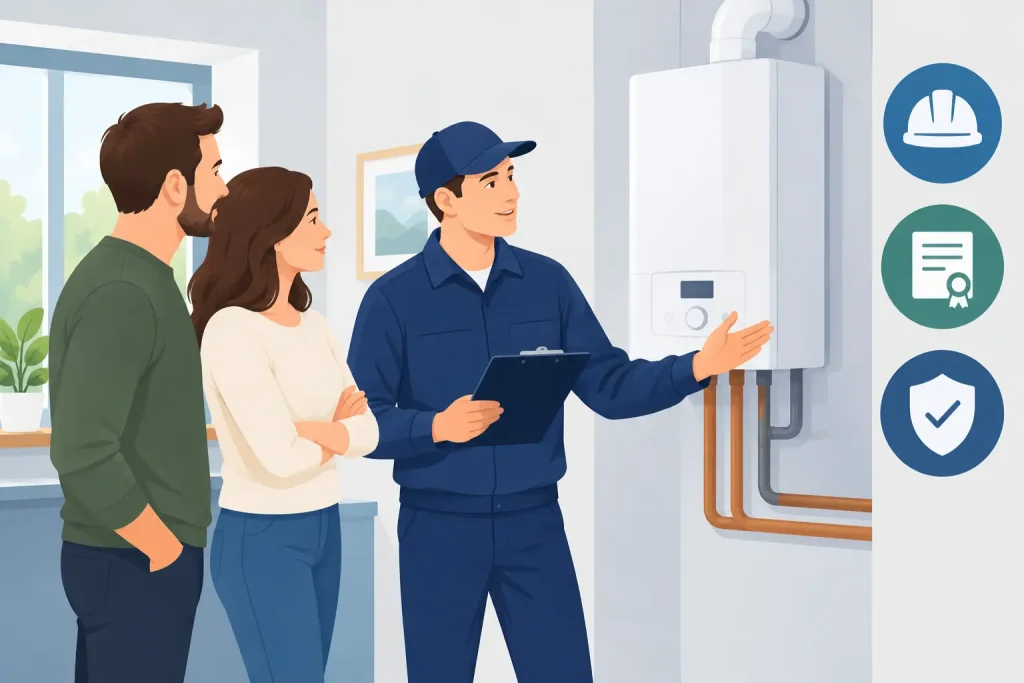
A boiler breakdown can make qualification checks feel like a delay you cannot afford. But a proper boiler engineer qualifications review takes only a few minutes and can protect your household, your property and your heating system. The right engineer should be able to explain the fault clearly, work safely on the appliance in front of them and leave you with confidence that the repair has been completed properly.
For homeowners, tenants, landlords and property managers, the key point is simple: not every person who can diagnose a boiler issue is legally qualified to carry out gas work. Credentials matter, but so do the engineer’s current registration, appliance-specific competence and approach to the job.
Boiler engineer qualifications review: what matters most
For domestic gas boilers in the UK, the first check is Gas Safe registration. Anyone carrying out installation, servicing, repair or safety work on a gas boiler must be registered with the Gas Safe Register. This is a legal requirement, not simply a desirable badge.
A Gas Safe registered engineer carries an ID card. You can ask to see it before work begins. The card confirms that the individual is registered and, crucially, shows the categories of gas work they are qualified to undertake. Registration alone is not a blanket approval for every gas appliance or every type of work.
For example, an engineer may be qualified for domestic boilers and gas cookers, but not for work on a particular type of appliance or fuel. Checking the back of the card helps ensure their qualifications match the job required.
This matters especially when a boiler fault appears urgent. No heating or hot water is disruptive, particularly for families, vulnerable residents and occupied rental properties. Even so, a quick attendance should never mean cutting corners on safety checks or using an engineer whose competence cannot be verified.
Gas Safe registration is the essential starting point
A competent domestic boiler engineer should be able to provide their Gas Safe registration details without hesitation. Homeowners can verify these details independently and compare the listed qualifications with the work being requested.
It is sensible to check this for a routine annual service as well as a repair or replacement. During a service, the engineer may inspect combustion, ventilation, flue performance, gas pressure and the general safe operation of the appliance. These are safety-critical tasks, not just maintenance extras.
If you smell gas, suspect a gas leak, or notice signs such as soot marks, a yellow or lazy flame on another gas appliance, headaches or nausea that improve away from home, treat the situation seriously. Turn off the gas supply only if it is safe to do so, ventilate the property where possible and seek appropriate emergency help. Do not attempt to investigate a boiler internally yourself.
What the ID card tells you
The engineer’s card should show a photograph, registration number and expiry date. It should also show the categories of work the engineer is permitted to carry out. For a domestic boiler appointment, look for the relevant domestic gas and central-heating appliance categories.
Do not feel awkward asking. A professional engineer expects customers to check, particularly where gas safety is concerned. A clear, straightforward response is usually a good sign that the visit will be handled properly from the outset.
Qualifications matter, but practical experience matters too
Passing assessments and maintaining registration are essential. They do not, however, replace practical fault-finding experience. Modern boilers use controls, sensors, pumps, valves, fans and safety devices that can produce similar symptoms for very different reasons.
A boiler that loses pressure may have a small leak, a failed expansion vessel, a pressure relief valve issue or a problem connected to the heating system. A boiler that locks out may be affected by ignition, condensate, gas supply, ventilation or component faults. Replacing parts without a measured diagnosis can increase the bill without solving the root cause.
An experienced engineer should take a methodical approach. They will listen to what has happened, inspect the boiler and surrounding system, carry out relevant tests, explain what they have found and set out the repair options in plain English. If a part is needed, they should be honest about availability, cost and whether repair remains sensible for the age and condition of the boiler.
There are occasions when replacement is the better long-term choice, particularly if repairs are recurring or parts are becoming difficult to source. But a recommendation should be based on the appliance’s condition and your circumstances, rather than pressure to choose the most expensive option.
Questions to ask before you book a boiler engineer
You do not need technical knowledge to choose carefully. A few practical questions can reveal a great deal about the service you are booking.
Ask whether the attending engineer is Gas Safe registered and qualified for domestic boiler work. Confirm whether there is a call-out charge, what the diagnostic visit includes and whether a quotation will be provided before non-routine repair work goes ahead. It is also worth asking about likely attendance times, particularly where there is no heating, no hot water or a tenant is waiting for access.
For a boiler installation, ask what is included in the quotation. A clear quotation should distinguish between the boiler itself, labour, required components, system preparation and any additional work that may be identified. The cheapest initial figure is not always the best value if essential work, warranty requirements or commissioning are unclear.
For a service, ask whether the engineer will provide service documentation. Keeping a record of servicing and repairs can support manufacturer warranty conditions, help landlords maintain records and give future engineers useful background if a fault develops.
Warning signs worth taking seriously
Most customers are focused on getting the heating back on, which is entirely understandable. Still, certain behaviours should make you pause before authorising work.
Be cautious if someone refuses to show identification, cannot explain their diagnosis, pushes for immediate payment before discussing the work, or offers an unusually vague price. The same applies if an engineer dismisses safety questions, suggests bypassing a safety device or appears unwilling to provide a written record of the work completed.
A professional repair does not have to involve a long technical explanation. It should involve a clear one. You should know what the issue was, what was done, whether any part was replaced and what you need to do next, if anything.
The right qualification for the work in your home
Boiler work is not one single task. A yearly service, a loss-of-pressure fault, a boiler replacement and a suspected flue issue all require different checks and levels of time on site. The right engineer has the legal qualifications for the appliance and the practical judgement to know when further investigation is needed.
This is particularly relevant in London homes, where boilers may be fitted in cupboards, kitchens, utility areas or converted spaces with limited access. An engineer needs to assess the appliance safely in its actual setting, rather than rely on a quick assumption from an error code or a brief phone description.
At D C N Hinds Limited, the aim is to provide prompt, safety-focused support without making the process complicated. Whether you need a service, diagnosis, repair or installation, you should receive a clear explanation and a fair quotation before moving forward.
When you book a boiler engineer, choose someone you can verify, who arrives prepared to diagnose properly and who communicates clearly throughout the visit. That small check at the beginning can make a significant difference to the safety, reliability and lifespan of your heating.
