
A radiator that is hot at the bottom but cold across the top usually has one straightforward problem: trapped air. Knowing how to bleed radiator system components can bring rooms back up to temperature, reduce cold spots and help your heating run more evenly. It is a small job, but it needs doing carefully – particularly where boiler pressure is concerned.
If your radiators are only partly warm, do not immediately assume the boiler has failed. First, work out whether the pattern points to air, sludge, a valve issue or a wider heating fault. That saves time and helps avoid making an otherwise simple problem worse.
When does a radiator system need bleeding?
Air rises inside a radiator, so the usual warning sign is a cold top section with warmth lower down. You may also hear gurgling, trickling or bubbling noises when the heating is running. Some rooms may heat slowly while others feel normal.
Bleeding releases that trapped air through the small valve at the top of the radiator. Water then fills the available space, allowing heat to circulate through the full panel again.
A radiator that is cold at the bottom but warm at the top is different. This often points to sludge or debris settled inside the radiator rather than air. Bleeding will not normally solve that issue. Likewise, if only one radiator stays cold while the rest of the home is warm, check that both radiator valves are open before assuming it needs bleeding.
Before you bleed a radiator system
Turn the heating off and allow the radiators to cool. You need the circulating pump stopped so air can rise to the top of each radiator, and you do not want hot water escaping onto your hands, wall or flooring.
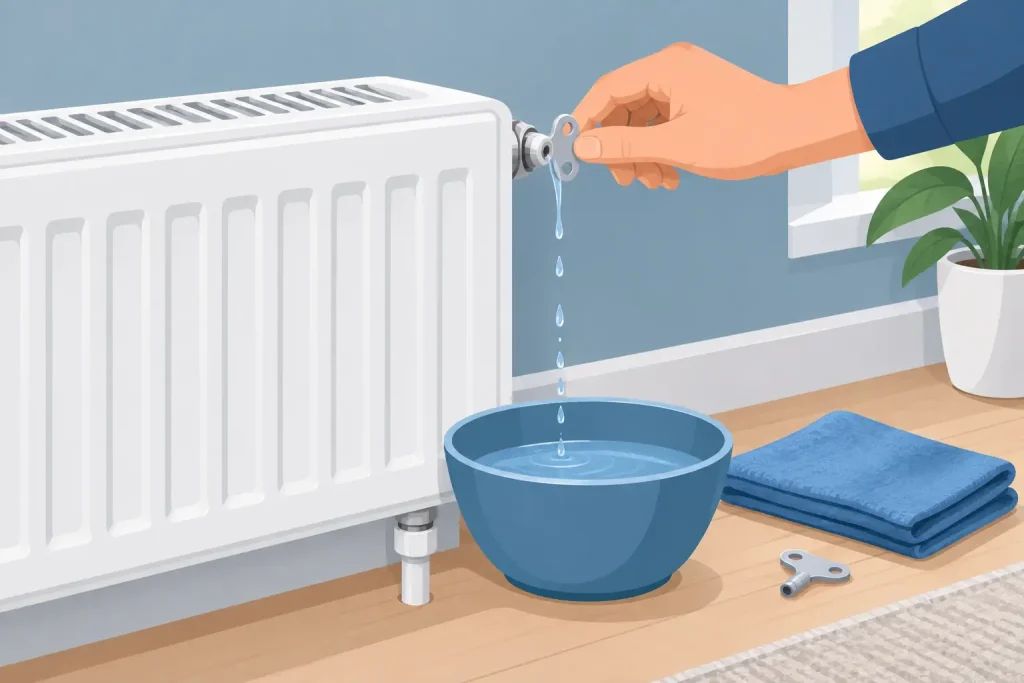
Have a radiator key ready. A small flat-head screwdriver is used on some modern bleed valves, but only use a tool that fits properly. Keep a dry cloth or towel underneath the valve and a small container nearby to catch any water.
If you have a sealed central-heating system, look at the boiler pressure gauge before you begin. Many systems sit around 1 to 1.5 bar when cold, although the correct range depends on the boiler and manufacturer instructions. Make a note of the reading. Releasing air can lower pressure slightly, especially if several radiators need attention.
Do not remove the entire bleed valve or loosen it too far. It only needs a small turn. If the valve looks corroded, damaged or already damp, stop there and arrange an engineer. A stuck or failing valve can turn a quick maintenance job into a leak.
How to bleed radiator system components step by step
Start with the radiators on the lowest floor and work upwards through the home. In a house with more than one level, this approach helps you deal with air that has travelled upwards through the system. If you live in a flat, simply work through each radiator in turn.
Place the cloth beneath the bleed valve, which is usually at the upper corner opposite the controls. Insert the radiator key and turn it anti-clockwise very slowly – often no more than a quarter turn is required.
You should hear a gentle hiss as trapped air escapes. Keep the valve open until the hissing stops and a steady trickle of water appears. At that point, turn the key clockwise until the valve is snug. Do not overtighten it, as that can damage the valve or its seal.
Wipe the area dry and check for drips. Repeat the process on the remaining radiators that need it. There is no benefit in bleeding a radiator that is heating evenly and shows no sign of trapped air, although checking all radiators after a system has been drained or altered can be sensible.
Once finished, turn the heating back on and allow it to warm up. Check that each radiator heats more evenly from top to bottom. Return to the boiler pressure gauge after the system has cooled again. If the pressure has dropped below the recommended range, it may need topping up using the filling method set out in the boiler manual.
Only repressurise a boiler if you understand the correct procedure for your model. Adding too much water can cause its own problems. If you are unsure, an engineer can check pressure, valves and the wider system safely.
What should happen after bleeding?
A successful bleed should leave the radiator warm across its surface, apart from minor temperature variation near the valves. The room should reach its set temperature more easily, and gurgling noises should reduce or disappear.
One radiator may still take longer to heat than another. This can be a balancing issue, where water is not being shared evenly around the circuit, rather than a bleeding problem. Balancing involves adjusting radiator valves carefully and is best approached methodically, especially in a larger property.
Why boiler pressure matters after bleeding
Your boiler relies on the right amount of water pressure to circulate heated water around the radiators. When air is released, system pressure may fall. A small change is common; a significant or repeated drop is not something to ignore.
Low pressure can leave radiators lukewarm or prevent the boiler from operating properly. It may be linked to a recent bleed, but it can also indicate a small leak, a faulty pressure relief component or an issue with the expansion vessel. Constantly topping up the pressure without finding the cause can introduce more fresh water and oxygen to the system, which is not ideal for its long-term condition.
Check around radiator valves, bleed valves and visible pipework for moisture. Also look beneath the boiler for obvious signs of dripping. Do not remove the boiler casing or attempt internal repairs. Boiler work should be carried out by a qualified heating engineer.
When bleeding is not the answer
Bleeding is useful maintenance, but it cannot cure every heating complaint. Arrange professional diagnosis if you notice any of the following:
- A radiator needs bleeding repeatedly, perhaps every few weeks.
- Pressure continues to fall after the system is topped up.
- Water leaks from a bleed valve, radiator valve or pipe connection.
- Several radiators are cold at the bottom or have brown, discoloured water.
- The boiler locks out, makes unusual noises or shows a fault code.
- You smell gas or suspect a gas leak. Leave the property if necessary, avoid switches and naked flames, and contact the appropriate emergency gas service.
Recurring air in a heating system usually has an underlying cause. It may be a slow leak drawing air in, corrosion within the system, poor pressure control or a component fault. The correct repair depends on diagnosis, not repeated bleeding.
For landlords and property managers, this distinction matters. A tenant may reasonably report that a radiator feels cold, but the cause could be simple trapped air or a fault affecting the whole heating system. A prompt inspection protects comfort, reduces repeat call-outs and helps keep the property’s heating provision dependable.
Keeping radiators heating evenly
Bleed radiators when there are clear signs of air rather than making it a weekly routine. For many households, a check before the heating season and another if performance changes is enough. Keep the boiler serviced at the recommended interval, and respond early to loss of pressure, leaks or uneven heating.
Avoid covering radiator valves with furniture where possible, and make sure thermostatic radiator valves are not stuck in the closed position after summer. If a valve feels seized, do not force it. A damaged valve can leak and may need replacing.
D C N Hinds Limited supports households across North London with heating diagnostics, boiler repairs and practical help when radiators are not performing as they should. If bleeding has not restored the heat, or pressure keeps dropping afterwards, a proper check can identify the fault before a cold room becomes a larger heating problem.
A warm radiator should be quietly doing its job, not demanding constant attention. If yours keeps collecting air, losing heat or affecting boiler pressure, treat that pattern as useful evidence and have the system checked properly.
