
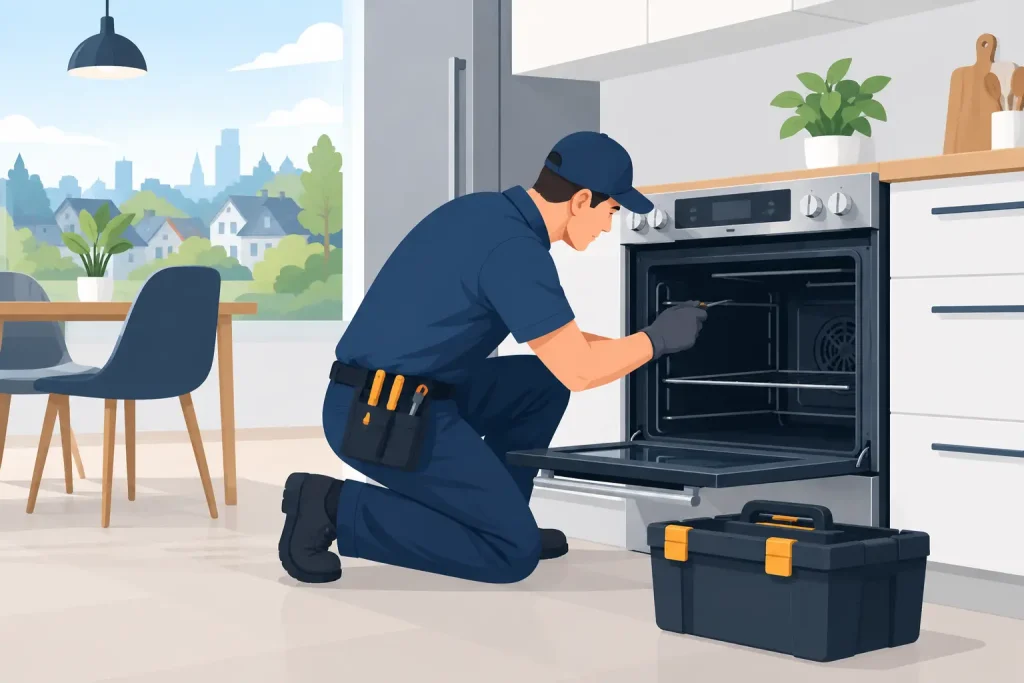
A cold oven can turn a normal evening into a problem very quickly. Whether dinner is already prepared, children need feeding or a tenant has reported a fault, N18 oven repair should start with a safe, clear diagnosis rather than guesswork. A cooker may still light up while failing to heat properly, or heat unevenly enough to spoil every meal. Both gas and electric oven faults need prompt attention, particularly when the appliance is used every day.
For households and landlords in Upper Edmonton, a local engineer can identify the cause, explain the repair options and aim to get the oven back in service without unnecessary delay. The right repair depends on the fault, the appliance’s age and whether a suitable replacement part is available, but many common oven problems are repairable.
When to arrange N18 oven repair
It is sensible to book an engineer when an oven repeatedly trips out, will not reach temperature, cooks food unevenly or has stopped working altogether. Waiting can make daily routines harder and, in some cases, allow a minor component failure to develop into a more disruptive problem.
An electric oven that turns on but remains cold may have a failed heating element, temperature sensor or control component. If the fan runs but food takes much longer than usual to cook, the element is often a likely cause. On the other hand, an oven that becomes far hotter than its setting may have a thermostat or sensor issue and should not be relied upon until it has been checked.
Gas ovens need particular care. A burner that will not ignite, goes out after lighting or produces an unusual flame needs professional attention. If you smell gas, do not try to investigate the appliance yourself. Turn the gas supply off if it is safe to do so, open doors and windows, avoid using electrical switches or naked flames, leave the area and call the National Gas Emergency Service on 0800 111 999. A gas oven repair should only be carried out by a suitably qualified gas engineer.
Common oven faults and what they can mean
The symptom gives an engineer a useful starting point, but it rarely confirms the failed part by itself. Proper diagnosis matters because several different faults can produce the same result.
The oven is not heating up
For fan ovens, a burnt-out circular heating element is a common reason for no heat. The fan may continue to operate, which can make it seem as though the oven is working when it is not. Conventional ovens may instead have a fault with their upper or lower element, selector switch or temperature control.
If the display works but the oven will not heat, avoid repeatedly switching it on and off in the hope it will recover. This will not repair the component and may complicate the fault. An engineer can test the relevant parts and advise whether replacement is worthwhile.
Food is cooking unevenly
Burnt edges, pale centres and trays that cook differently depending on where they sit can point to poor heat circulation, an element that is only partially working or inaccurate temperature control. Before arranging a visit, check that shelves are fitted correctly and that cookware is not blocking airflow. If the problem continues, a repair is usually the more practical next step.
Uneven cooking does not always mean the oven needs replacing. A targeted repair can restore predictable temperatures, which is particularly useful for busy households and rental properties where a reliable cooker is essential.
The oven trips the power or cuts out
If an oven causes the circuit to trip, stop using it and arrange a professional appliance repair. A damaged heating element or internal wiring fault within the appliance can be responsible. Resetting the power repeatedly may leave the underlying issue unresolved and can put further strain on the cooker.
An engineer will inspect the appliance safely, identify the affected component and explain the available repair. The goal is to repair the oven itself correctly, not simply get it running for a short time.
The fan is noisy or has stopped turning
A fan oven relies on steady air movement to distribute heat. Rattling, scraping or loud humming can indicate a worn fan motor, loose fan blade or bearing problem. If the fan has stopped, the oven may overheat in one area, cook poorly or fail to operate as expected.
It may be tempting to continue using a noisy fan oven at a lower temperature, but that can result in unreliable cooking and further wear. Early diagnosis is generally the better option.
The door will not close properly
A damaged seal, worn hinge or misaligned door can allow heat to escape. This makes cooking slower, affects temperature consistency and can increase energy use. The glass may also become unusually hot around the door area.
Do not force a stiff door or attempt to adjust hinges without knowing the appliance design. Oven doors are heavier and more complex than they appear, especially where glass panels and springs are involved. A repair can often be completed with the right replacement parts.
What to do before an oven engineer arrives
A few simple checks can help make the visit more efficient. First, note the make and model number, usually found around the door frame or inside the appliance. Also make a note of what happens when you select a cooking function: does the display come on, does the fan run, does the grill work, and does the fault occur immediately or after several minutes?
Remove food, trays and loose items from the oven if it is safe to do so, then allow it to cool completely. Avoid dismantling panels, replacing parts from online guesses or using the appliance after it has tripped out. These actions can create a safety risk and make accurate diagnosis more difficult.
For landlords and property managers, it is helpful to obtain the tenant’s description of the issue before booking. Details such as intermittent faults, error codes, burning smells, unusual noises or the last time the oven worked properly can save time on arrival.
Repair or replace: making a sensible decision
Replacement is not automatically the best answer when an oven fails. The decision usually comes down to the appliance’s condition, its age, the cost and availability of parts, and whether there are multiple faults. A relatively modern oven with a failed element, thermostat, ignition part or door seal is often a good candidate for repair.
Replacement may make more sense where an older cooker has several worn components, parts are no longer available or the repair cost is disproportionate to the appliance’s remaining life. A good engineer should set this out plainly. Clear advice is more useful than pressure to choose the most expensive route.
For rental properties, speed matters, but so does a repair that will last. A quick temporary fix may not be the right choice if a reliable component replacement can prevent another call-out soon afterwards. Equally, where replacement is the practical option, knowing that promptly helps landlords meet their responsibilities and minimise disruption for tenants.
Safe, responsive oven repairs in N18
Ovens combine heat, gas or electrical components, moving parts and controls in one hard-working appliance. That is why the repair should be based on inspection and testing, not assumptions. D C N Hinds Limited provides practical support for gas and electric oven faults, with a focus on safe workmanship, clear quotations and responsive attendance across N18 and nearby North London areas.
When booking, explain the make of oven, the fault and whether it is gas or electric. This gives the engineer the best chance of arriving prepared and helps establish whether the issue needs urgent safety advice. Same-day attendance may be possible depending on availability, with next-day support offered where needed.
A working oven is easy to take for granted until it fails just before a family meal or during a busy tenancy. Arrange a professional check early, keep the appliance switched off if it appears unsafe, and ask for a clear explanation of the repair before work begins.
